

Written by: Nadya Affendy, Medical Student
Have you ever been told to ‘study smart, not hard?’.
I used to think I was an anomaly and could solely study hard without fail, but student life quickly got in the way – placements, long commutes, cooking, and trying to have a social life.
I just felt incredibly overwhelmed, as many students do, and was looking to change my habits. That’s when something unexpected popped up, it was an email asking if I wanted to test out a new AI tool by Elsevier, StudyFinderAI. I was immediately intrigued and two questions came to mind:
- Would this really help me with my studies? (Spoiler alert: it did!)
- How is this different to any other tool on the market?
Studying smarter (not harder)
If I’m being honest, passive learning was something I have been guilty of doing.
Highlighting notes. Rereading powerpoints. Cramming content before my tests.
I used to convince myself saying I remembered the content this time around (which was not true).
I realised that what I needed was to truly interact with my material, and that’s where StudyFinder AI helped me.
The “test” feature in particular really helped me with this. I used to struggle with answering questions related to the brachial plexus. I felt like I knew it in theory, but struggled to apply my knowledge. That’s when I decided to prompt the AI to provide questions related to brachial plexus injuries, where it gave the option for both clinical and preclinical questions with the particular difficulty I chose.
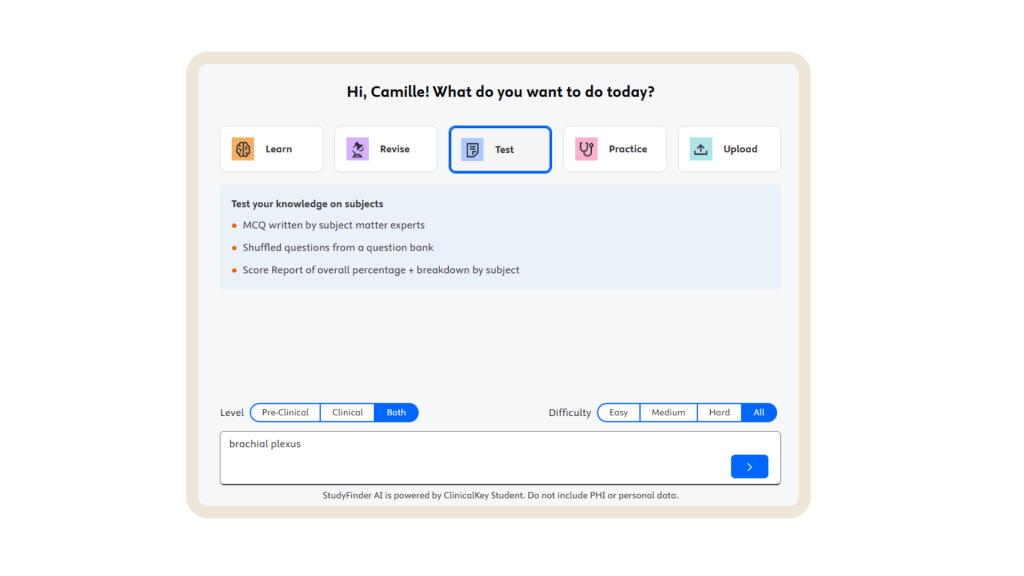
This really forced me to actually take a step back and think, apply, and retrieve my knowledge. I won’t say this magically made me become perfect at understanding one of the most challenging topics of preclinical medicine, but I would say it did give me exposure to the nature of questions that may be asked in exams which in turn improved my confidence.
I’m also the type of person to learn from mistakes, which is why it was really helpful that explanations were given whether I got a question right or wrong. Extra resources were also provided so you’ll never feel like you didn’t understand what went wrong.
From lecture slides to learning more
Content in medical school is truly never-ending. Reviewing lectures can sometimes feel like a chore, especially when there’s over 100 slides of small text.
On top of that, lecture slides don’t tell the whole story, which is understandable if the lecture has to be done within an hour. However, jumping into key facts and conclusions made me feel lost, where I always sought for why things are the way they are.
That’s why I found it really helpful to use the “upload” feature. This allowed me to input my lecture slides and notes, which the AI would help to extract the key concepts of the topic I was learning. For example, a lengthy topic like visual pathways would be split into digestible chunks of the optic nerve, optic tract, and so on.
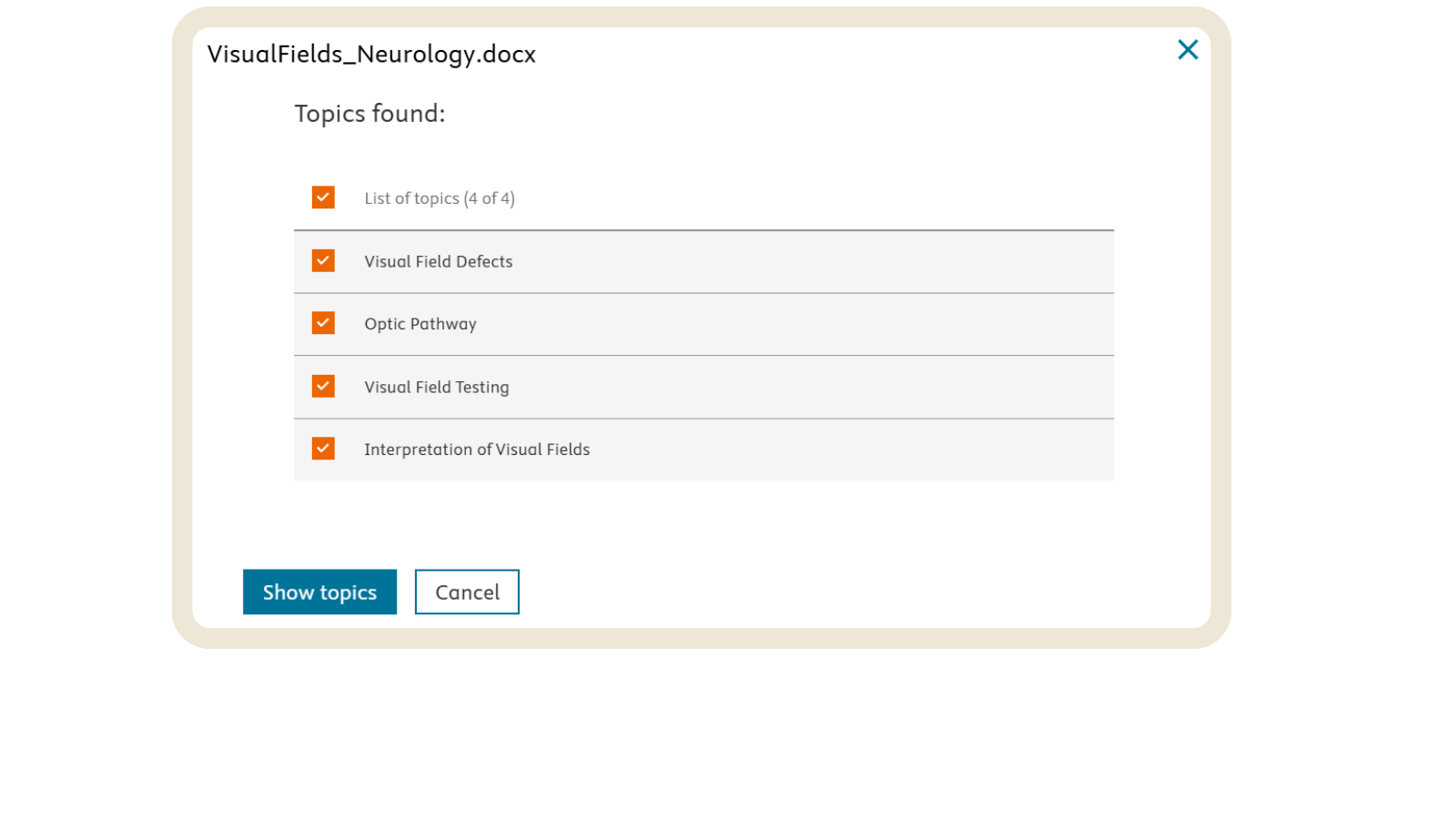
Instead of simply summarising, it utilised the “learn” feature which helped me bridge the gaps in my knowledge by giving more context. Instead of simply knowing that an injury to a part of the brain caused a specific visual defect, I finally understood why this happened so I could apply it to questions in the future.
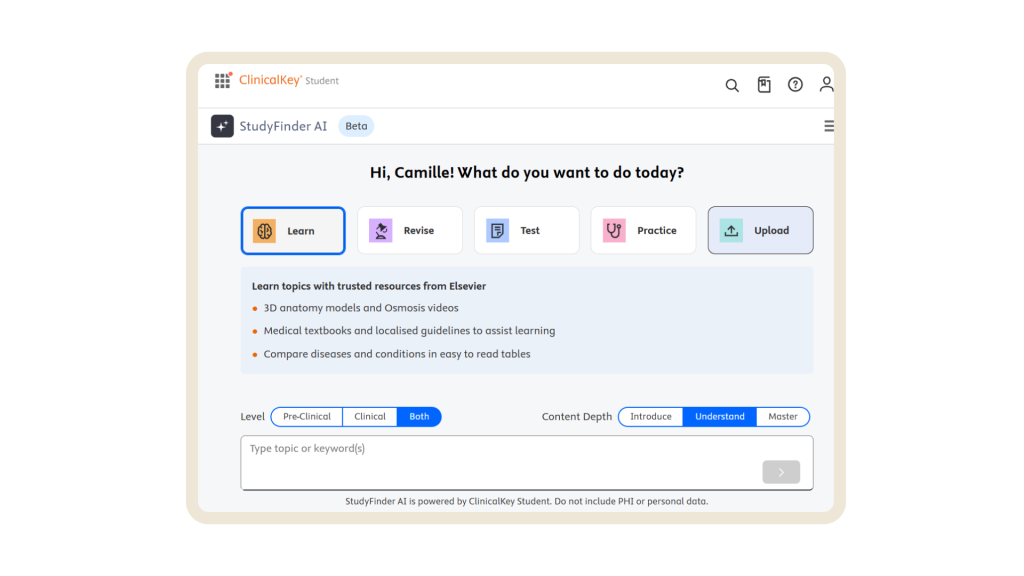
I think a lot of us are visual learners, so it was nice to have recommendations for relevant Osmosis videos, links to Complete Anatomy, or even imaging such as Xrays and CT scans. Sometimes this little addition was what I needed to properly solidify my understanding.
Learning on the wards
Applying the theory you learnt in a clinical setting is a challenging yet integral part of placements as a medical student. It’s completely normal to “know” the content but freeze when a doctor asks.
I know we’ve all had moments where we were asked a question on the ward and our mind just goes…blank.
I know I definitely have, whether it was questions about anatomy, what tests to order, differential diagnoses, and the list goes on.
To get better at this, I started using the “practice” feature, where I would put in a condition I wanted to get better at understanding, and would get back a virtual case with real life examples.
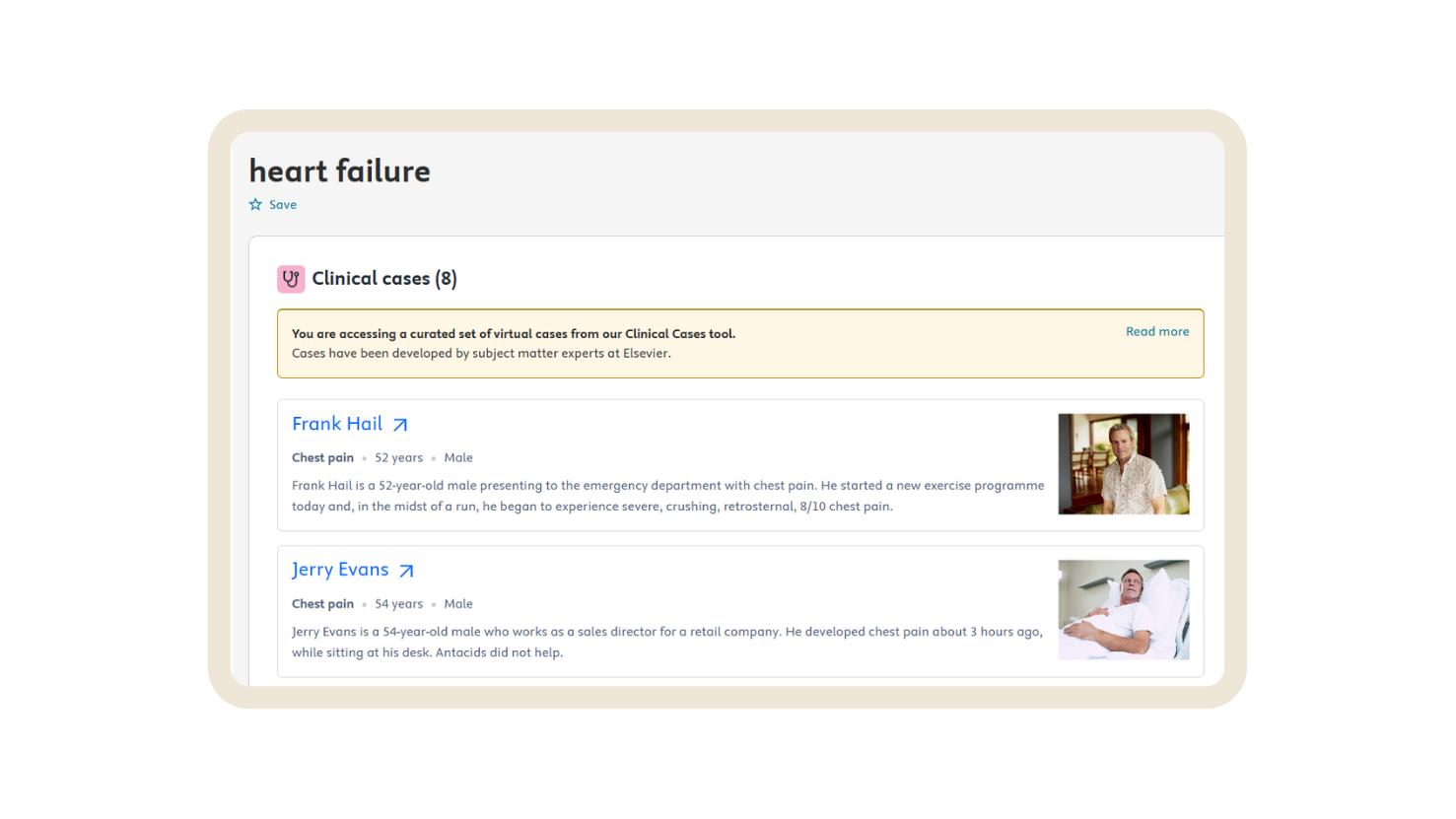
I remember my first time on the cardiac ward where I really struggled with remembering the drugs for heart failure. The first thing I did when I got home was input “heart failure” into the practice feature. It would test me on how to present a case to a clinician, the possible differentials, all the examinations I’d conduct. It felt like I had clinical experience in my own bedroom.
Albeit, I still made mistakes the next day when answering questions, but I did feel more confident in my ability to understand the investigations needed, and also taking a patient history.
Trusted sources
A key part of medicine is evidence based learning which isn’t guaranteed by a lot of AI tools. That’s what stood out about StudyFinder; the AI bases itself off of trusted sources from Elsevier textbooks, as well as the NICE guidelines. The same kind of textbooks which are recommended by professors and lecturers throughout medical school.
This meant that I wasn’t dealing with the “AI hallucination”, or working with unverified information. Instead, the content aligned with the material we’re expected to know and be assessed on.
So…did this help me study smarter?
Learning how to study isn’t something that I learnt overnight. In fact, I’m still tweaking it to this day.
Undoubtedly, StudyFinder AI has been incorporated into my daily study routine, whether it’s
- Quizzing myself before an exam
- Reviewing topics before and after placement
- Improving my clinical reasoning to become a better clinician
If you’ve ever felt like you’re in a vicious cycle of re-reading notes, you’re definitely not alone.
Sometimes, all you need is a virtual study buddy.
Discover Trusted AI resources!
Elsevier provides enhanced learning solutions you can trust, powered by responsible AI! Searching only Elsevier curated content, not the open web. Click here to check if you have access to Elsevier AI resources at your institution!
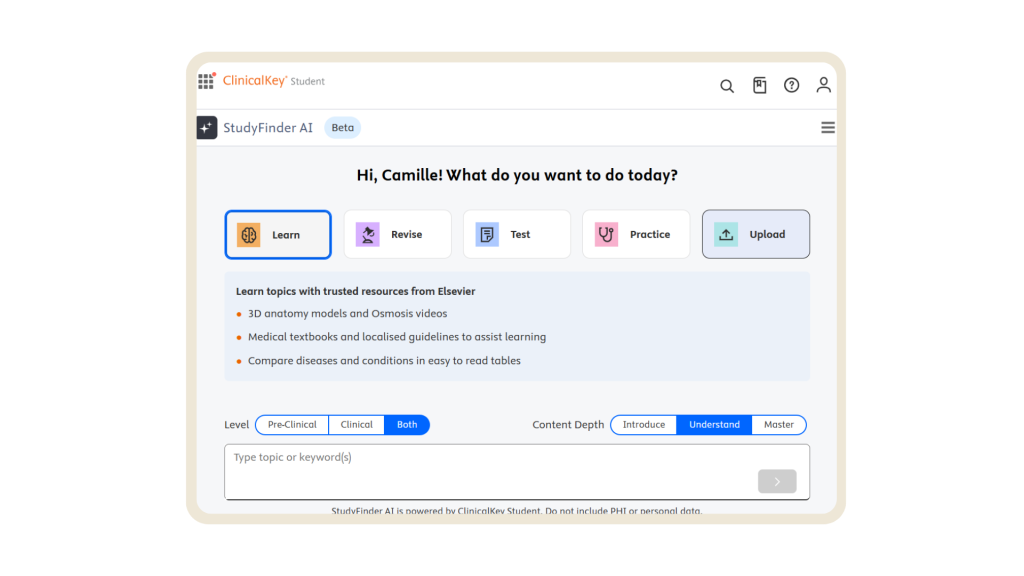
Studyfinder AI, enhancement to ClinicalKey Student designed to help you find what you need faster
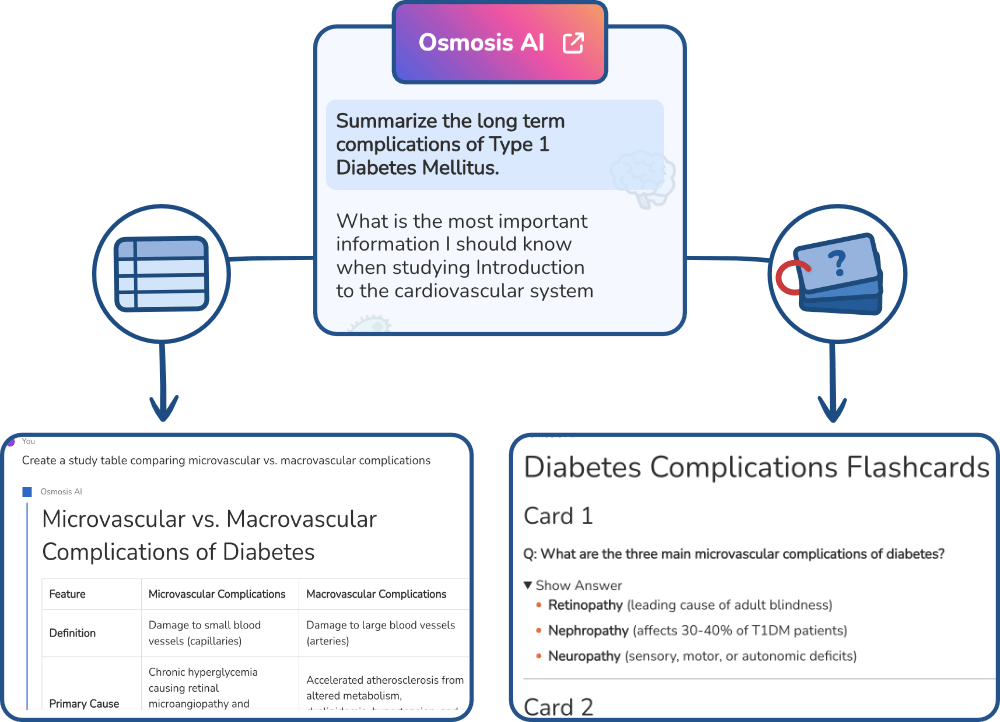
Osmosis AI, conversational study companion designed to help you make sense of the most complex topics
Leave a Reply