

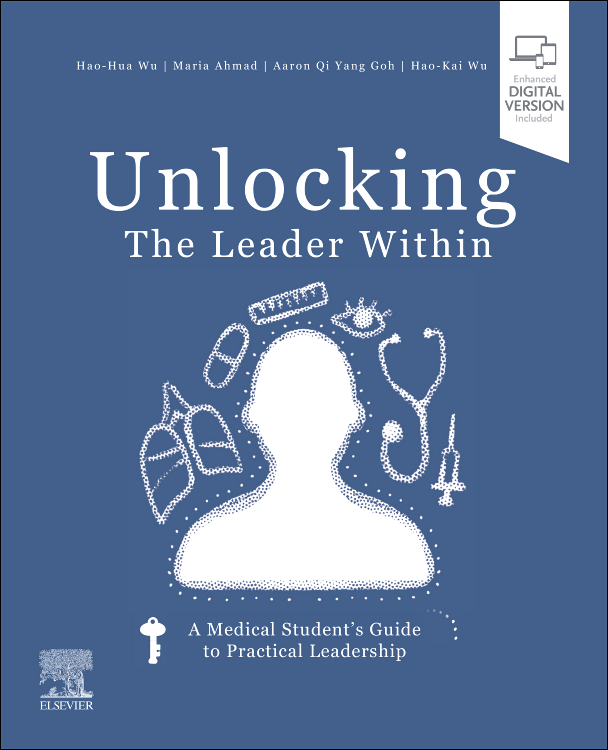
Author: Aaron Qi Yang Goh, co-author, Unlocking the Leader Within: A Medical Student’s Guide to Practical Leadership
Imagine this: after a full day of clinical rotations, you rush through a microwaved dinner and ready yourself for an evening of studying. You’re already physically exhausted but feel the need to push through the tiredness – Step exams are around the corner, after all. After an unproductive few minutes, you reach for your phone and begin doom scrolling through Instagram. Without realizing it, it is already past midnight – you chide yourself for your unproductivity and head off to bed. The next morning, your alarm goes off at 5:30am, and you struggle to get out of bed for rotations. You rationalize that you’re feeling stressed from the workload, but could it be something else?
More than just ‘feeling stressed’, burnout is defined as “a state of mental and physical exhaustion related to work or caregiving activities” and is a phenomenon of long-term stress which is not well-managed. Burnout is often insidious, and it is important to be aware of its early signs:
(i) Emotional exhaustion
(ii) Increasing cynicism and depersonalization
(iii) Negative self-evaluation
By understanding why burnout happens and building practical strategies to mitigate it, we can protect our passion and keep ourselves going in the marathon of clinical training.
Why Do We Burnout?
External Pressures. As though the demands of medical school are not enough, there are also residency/portfolio applications and extracurriculars to worry about. And these exclude our personal commitments outside of school, like to our family and loved ones.
Internal Pressures. We hold ourselves to high expectations which often drives us to become better. But if said expectations are unattainably high and we fail to meet our own goals, we end up with even more self-inflicted stress and feelings of self-doubt.
We don’t ask for help. Perhaps we don’t want to trouble others, or we worry that asking for help causes others to perceive us as weak/incompetent. It is also challenging to ask faculty/seniors for advice if we perceive them to be too busy or uninterested to help. For some of us, we’ve had to move away from family and friends to attend university, and distance makes it challenging for us to ask these trusted confidantes for advice.
Strategies to Mitigate Burnout
Recalibrate Your Expectations. Setting expectations that are too ambitious may create unnecessary pressure when we fall short. Acknowledge your limitations and choose to set goals that are achievable within a realistic timeframe.
Seek out Support. Being connected to a support network is essential and will help you navigate highs and lows of clinical training. This may be your loved ones, friends in or outside of school, or a group founded on a common interest (like a recreational sports group or religious community). Should you feel the need for professional help, a counsellor or therapist may be appropriate to help you navigate through more complex issues.
Create Space for Active Rest. This is not just about taking a week-long vacation or a Netflix binge – but about engaging in activities that we enjoy, are good at, and give us a sense of achievement/mastery. This looks different for everyone – amongst us co-authors, our choice of “active rest” activities include basketball, singing, and even writing fiction! Such activities help us refresh and clear our mind, providing us with a newfound sense of purpose when we return to our work.
References:
- “Unlocking The Leader Within” Book, Chapter 8: “Avoiding Burnout”
- Ishak WW, Lederer S, Mandili C, Nikravesh R, Seligman L, Vasa M, Ogunyemi D, Bernstein CA. Burnout during residency training: a literature review. J Grad Med Educ. 2009 Dec;1(2):236-42. doi: 10.4300/JGME-D-09-00054.1. PMID: 21975985; PMCID: PMC2931238.
- https://icd.who.int/browse/2025-01/mms/en#129180281
Content adapted from
Unlocking The Leader Within: A Medical Student’s Guide to Practical Leadership
Available in print and on ClinicalKey Student
Leave a Reply