

By Isabel Candir, Final Year Medical Student at the University of Leeds
If you’re stressed about your medical portfolio, you’re not alone. When I was starting, I thought it was just a giant folder of certificates I’d pull out for a single interview. That’s a common mistake. Your portfolio isn’t just paperwork; it’s your entire career launchpad. The more authentic and comprehensive it is, the more opportunities you’ll unlock internships, fellowships, society roles, and eventually, the job you want. It’s essentially your professional story, proving what you’ve achieved and who you’re becoming.
Here’s the breakdown of what I learned building mine:
1. Get on LinkedIn!
I wish I’d focused on this earlier. LinkedIn is the easiest way to get visible. It’s not about bragging; it’s about making genuine connections. Think of it as a great way to meet people in your areas of interest, like a digital networking event. More importantly, it’s a brilliant achievement tracker. We often forget many of the things we do in the chaos of medical school, but LinkedIn has a neat timeline feature that keeps a solid record of your roles and achievements, which is a lifesaver when you’re prepping a formal application.
- Keep it current with your current roles and elective plans.
- Start connecting with seniors, consultants, and your peers.
- Follow hospitals or organisations offering summer placements.
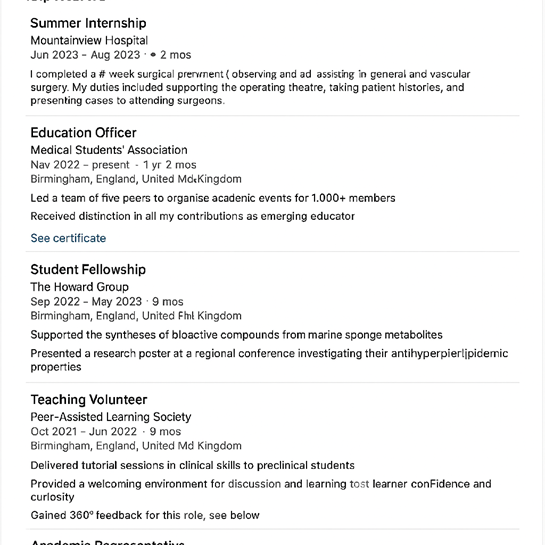
Your LinkedIn profile and your paper portfolio need to work hand in hand. Look at the example below
2. Find Opportunities
Don’t wait until interview season to dust off your folder. Build your portfolio by actively seeking experiences.
- Apply for summer internships (they look excellent).
- Scout out fellowships in areas you love.
- Get involved in society committees (like medical societies or specialty groups).
These roles are tangible proof of leadership and initiative. The biggest tip? Choose things you genuinely enjoy. Faking passion is draining, and authenticity always shines through.
3. Leadership and Teaching
The medical world really values people who step up and give back. Showing you’re capable of more than just passing exams is essential.
- Committee Roles: Great for demonstrating responsibility, teamwork, and administration. Keep meeting notes and any official documents.
- Teaching: Run a session for younger students. This proves you can communicate complex ideas and mentor others. Collect the feedback forms! That evidence is crucial.
These experiences show you’re not just a student; you’re already contributing to the wider medical community.
4. Hobbies and Balance
Employers don’t want burnt-out candidates. A balanced portfolio shows you’re a human who can handle pressure and maintain perspective.
- Sports, music, or creative stuff: These demonstrate discipline, focus, and teamwork—all transferable skills!
- Volunteering: Highlights empathy and service.
Having hobbies proves you can manage stress and maintain perspective. It makes you a more well-rounded and memorable candidate.
5. Reflection
Collecting evidence is the simple part. The meaningful part is the reflection. After every single experience, take 10 minutes and ask yourself:
- What did I actually learn from that?
- How did this change my approach to patient care or my career goals?
- Where does this fit into my long-term journey?
Keep it organized, whether it’s a digital drive or a physical binder. A clean structure says a lot about your professionalism.
6. Avoid Common Pitfalls
- The Folder of Dust: Keep the portfolio alive! Try a new experience or continue one every few months.
- The Certificate Collector: Don’t just grab a certificate and move on. If you didn’t reflect, it’s just paper.
- Clutter: Don’t include random, irrelevant stuff. Prioritize quality over quantity.
- Forget Balance: Medicine plus hobbies equals a well-rounded and successful applicant.
Your portfolio is your passport. Use it to capture experiences, network effectively, and showcase your authentic journey.
Remember that platforms like LinkedIn can serve as a vital, easily updated record, helping you track all the achievements you might otherwise forget. By getting stuck into internships, fellowships, society roles, hobbies, and teaching, you will create a portfolio that doesn’t just support applications but seriously unlocks your future.
Leave a Reply