

February is Heart Month and Valentine’s Day, a perfect time to sharpen your cardiology knowledge. This 3-step cardiology review contrasts healthy vs. “broken” hearts providing a practical framework you can apply in rotations and exams.
Begin with the fundamentals of heart anatomy, advance through major heart diseases, and finish with clinically relevant decision-making. Featuring trusted resources from ClinicalKey Student, Osmosis, and Complete Anatomy, this review can help you study efficiently.
Anatomy of the Heart
Osmosis offers short white-board style animated videos to support your learning of difficult concepts, accompanied by flashcards and practice questions to reinforce your learning.
Related Resources:
With Complete Anatomy you can rotate the heart in 3D, explore layers, valves, and vessels, and visualize anatomical relationships with precision. This type of exploration helps to memorize key structures and connect theory with clinical practice.
Related Resources:
- Complete Anatomy: Introduction to Cardiovascular System
- Complete Anatomy: Visualize the Beating Heart
Heart Disease
Although a wide range of diseases can affect the cardiovascular system, the pathophysiologic pathways that result in a “broken” heart can be distilled down to six principal mechanisms:
- Failure of the pump. In the most common situation, the cardiac muscle contracts weakly and the chambers cannot empty properly—so-called systolic dysfunction. In some cases, the muscle cannot relax sufficiently to permit ventricular filling, resulting in diastolic dysfunction.
- Obstruction to flow. Lesions that prevent valve opening (e.g., calcific aortic valve stenosis) or cause increased ventricular chamber pressures (e.g., systemic hypertension or aortic stenosis) can overwork the myocardium, which has to pump against the increased obstruction (as in valvular stenosis) or resistance (as in hypertension).
- Regurgitant flow. Valve pathology that allows backward flow of blood results in increased volume workload and may overwhelm the pumping capacity of the affected chambers.
- Shunted flow. Defects (congenital or acquired) that divert blood inappropriately from one chamber to another, or from one vessel to another, lead to pressure and volume overloads.
- Disorders of cardiac conduction. Uncoordinated cardiac impulses or blocked conduction pathways can cause arrhythmias that slow contractions or prevent effective pumping altogether.
- Rupture of the heart or major vessel. Loss of circulatory continuity (e.g., a gunshot wound through the thoracic aorta) may lead to massive blood loss, shock, and death.
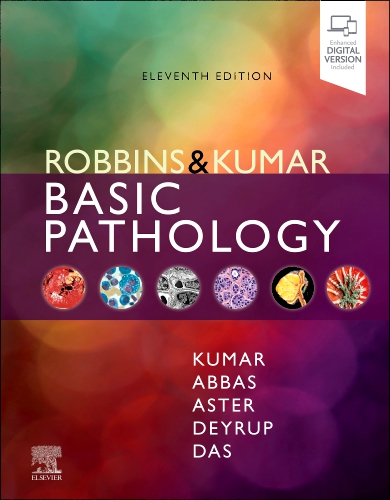
Content Adapted from Robbins & Kumar Basic Pathology
Avaliable in print and on ClinicalKey Student
Related Resources:
- Osmosis Pathology Review: Valvular heart disease
- Osmosis Pathology Review: Heart Failure
- Osmosis Video: Congestive heart failure
- ClinicalKey Student: Cardiomyopathy Summary
Myocardial Infarction
Myocardial infarction (MI), also commonly referred to as “heart attack,” is necrosis of the heart muscle resulting from ischemia. The 2018 joint task force of U.S. and European Cardiology groups defines MI “as the presence of acute myocardial injury detected by abnormal cardiac biomarkers in the setting of evidence of acute myocardial ischemia.” The major underlying cause of IHD is atherosclerosis; while MIs can occur at virtually any age, the frequency rises progressively with aging and with increasing risk factors for atherosclerosis ( Chapter 8 ).
Nevertheless, approximately 10% of MIs occur before 40 years of age, and 45% occur before 65 years of age. Men are at greater risk than women, but the gap progressively narrows with age. In general, women tend to be protected against MI during their reproductive years. However, menopause—with declining estrogen production—is associated with exacerbation of coronary artery disease, and IHD is the most common cause of death in older adult women.
Content Adapted from Robbins & Kumar Basic Pathology
Avaliable in print and on ClinicalKey Student
Did you know MI presents differently in woman? this knowledge helped Dr. Mike save his patient’s life, just in time! Hear this impactful patient story in Complete Anatomy’s latest collaboration with Dr. MIke.
Related Resources:
Leave a Reply