
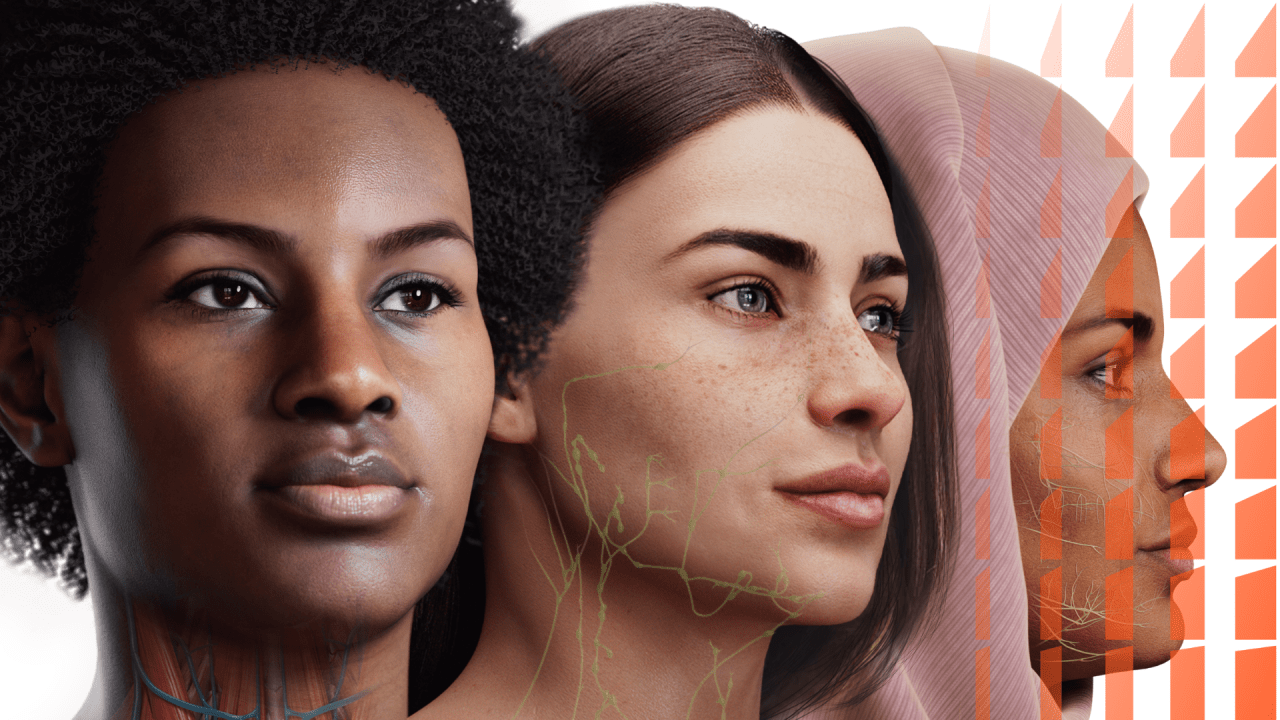
Did you know that, historically, most medical textbooks have used the male body as the “standard”? This lack of representation isn’t just an academic detail—it has real consequences for diagnosing and treating women. At Elsevier, we believe precision in medicine starts by studying diversity rigorously with the help of cutting-edge technology.
This International Women’s Day, we invite you to discover how our tools are breaking centuries of bias so that you, the next generation of health professionals, learn from an inclusive and equitable perspective.
The End of the “Default Model”: Complete Anatomy
To counter the gender bias that has historically treated the male body as the “standard,” Complete Anatomy has rebuilt female anatomy from the ground up. It’s not a simple adaptation; it’s an independent model that makes a real difference in three key areas:
- Realistic skeleton and musculature: Every bone, from the pelvis to the skull, reflects sexual dimorphism. In addition, muscle mass has been adjusted by 30% to faithfully represent the average female composition.
- Region-specific redesigns: Based on the latest research from experts like Dr. Yasmin Carter, breast tissue and reproductive organs have been completely remodeled, including precise anatomical details often omitted in traditional atlases.
- Comparative anatomy: The platform lets you instantly switch between models, facilitating the study of structural differences across each system and ensuring female anatomy carries the same academic weight as male anatomy.
This technological leap means the next generation of health professionals will train in an educationally equitable environment, directly improving clinical outcomes and care for patients. For years, the study of female anatomy was limited to swapping reproductive organs into a male body map. With Complete Anatomy, we’ve launched the world’s most advanced 3D female model, developed after four years of expert research.
- Innovation: Every bone has been modeled to faithfully reflect sexual dimorphism.
- Impact: It enables students to choose the female body as their study base, normalizing its representation and reducing the risk of future misdiagnoses.
Breaking Barriers in the Classroom: Osmosis
Understanding complex concepts in gynecology and obstetrics requires clarity and empathy. Osmosis’s whiteboard-style videos not only simplify science but also integrate a culturally responsive and diverse approach to care.
- Approach: Learn to connect the basic sciences with real clinical practice, cutting through information overload and focusing on what truly matters for your patients’ health.
Osmosis’s mission is to empower health professionals and caregivers with the best possible learning experience. To achieve this, the platform actively recognizes the impact of inequities and systemic biases that affect health education.
In its commitment to excellence, Osmosis seeks to train its students to identify and address challenges related to Diversity, Equity, Inclusion, and Belonging (DEIB).
Through this initiative, the platform works toward an inclusive culture that defends and celebrates diversity, recognizing the value and richness it brings to the clinical field. The goal is to contribute to creating a world where every individual feels welcome, respected, and able to thrive.
Bias-Free Evidence: ClinicalKey Student
Access to information is key but ensuring that information is inclusive is vital. The ClinicalKey Student interactive learning platform operates under strict inclusive-language guidelines to ensure content is sensitive to gender, race, and socioeconomic differences.
- Resource: Create your presentations with high-resolution images and automatically cited sources, ensuring your study materials reflect the reality of modern, diverse medicine.
Your Turn
At Elsevier, we celebrate you as the driving force behind this change today. Join us in breaking down bias in medical education.
Leave a Reply