

Yes, you read that right. The authors of your favorite textbooks— Guyton and Hall, Murray, Robbins, Moore, and Torchia —the ones that have supported you studying for exams, will be there live! Telling the story of how their books came about, how they’ve changed over the years, and what they mean for your education today. No third-party summaries here: the original story, straight from the source.
Are you in the early years? This is the best time: physiology, microbiology, pathology, and embryology are the foundation of everything that follows.
Join the Four Sessions!
Session #1: Guyton and Hall
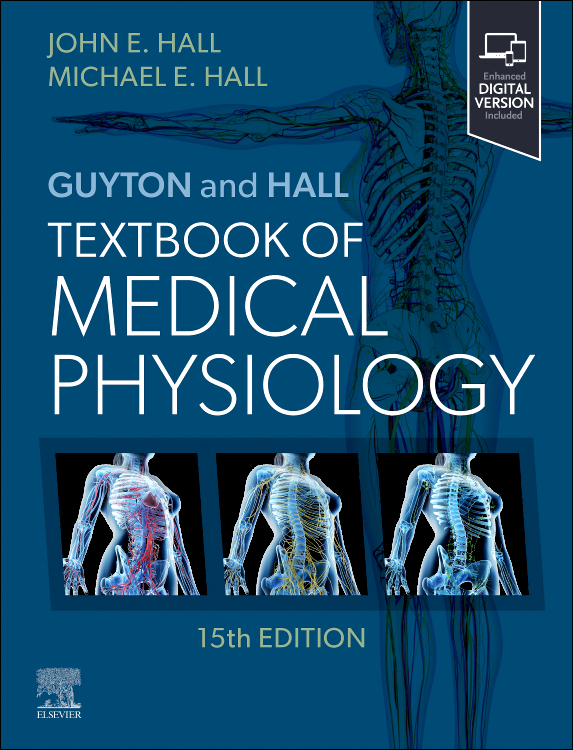
70th Anniversary of the Textbook of Medical Physiology: A Brief History and the Authors’ Perspectives’ Dr. John E. Hall.
Tuesday, August 18.
Language: English (with Spanish subtitles)
Country – Local Time
Mexico: 10:00 AM
London, United Kingdom: 5:00 PM
New York, United States: 12:00 PM
If you’ve ever memorized (or truly tried to understand) how the cardiovascular system works thanks to diagrams and explanations that “finally made sense”, it was probably thanks to this book. Since 1956, the *Guyton and Hall* has been the world’s leading reference for teaching physiology based on mechanisms, not pure memorization. John E. Hall, who took over from Arthur Guyton, tells you how this work remains relevant and current 70 years later.
Why it’s key to your training (15th edition):
– Everything revolves around homeostasis: the foundation of your clinical reasoning later on.
– Format with two font sizes: essential information highlighted + blue boxes with pathophysiology, cases, and mechanisms for further exploration when needed.
– More than 1,200 full-color illustrations and diagrams.
– Online resources in Spanish: heart sounds and animations to visualize physiological processes.
About the author: John E. Hall, PhD, is an Elsevier author, Arthur C. Guyton Professor of Physiology and Biophysics and Chair of the Department of Physiology and Biophysics, Associate Vice Chancellor for Research, and former Director of the Cardiovascular-Renal Research Center of Excellence at the University of Mississippi Medical Center.
Session #2: Murray, Medical Microbiology
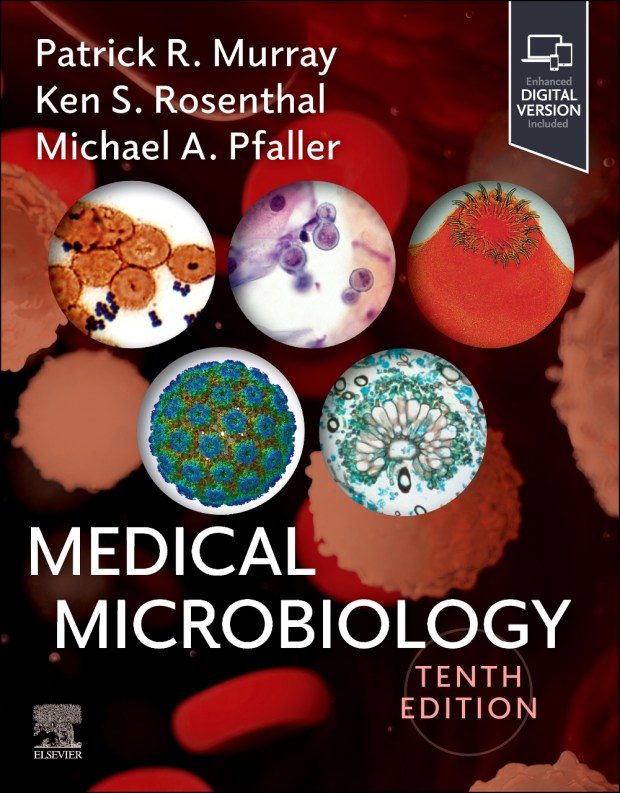
‘Medical Microbiology: From 1990 to 2026’, Dr. Patrik R. Murray
Wednesday, August 19
Language: English, with Spanish subtitles.
🔗 Register here
Country – Local Time
Mexico: 10:30 AM
London, United Kingdom: 5:30 PM
New York, United States: 12:30 PM
Bacteria, viruses, fungi, parasites… and how to relate them to real patients? For many, ‘The Murray’ is the first book that makes microbiology stop feeling abstract and start making clinical sense. In this session, Patrick R. Murray reviews more than three decades of changes in the field, from new diagnostic techniques to one of today’s biggest challenges: antimicrobial resistance.
Why it’s key to your training (10th edition)
: – Covers bacteriology, virology, mycology, parasitology, and immunology all in one place.
– New section with 8 chapters on infectious diseases organized by organ systems: ideal for thinking like in real-world clinical practice, not by isolated microorganisms.
– Clinical cases and photographs that connect basic science with the syndromes you’ll see in patients.
– Extra online content in Spanish: clinical cases, over 200 self-assessment questions, and videos.
About the author: Dr. Patrick R. Murray is Global Director of Scientific Affairs at BD Diagnostic Systems. He has a distinguished academic and clinical career, and has served as head of the Clinical Microbiology Service in the Department of Laboratory Medicine at the Clinical Center.
Session #3: Robbins, Cotran, and Kumar
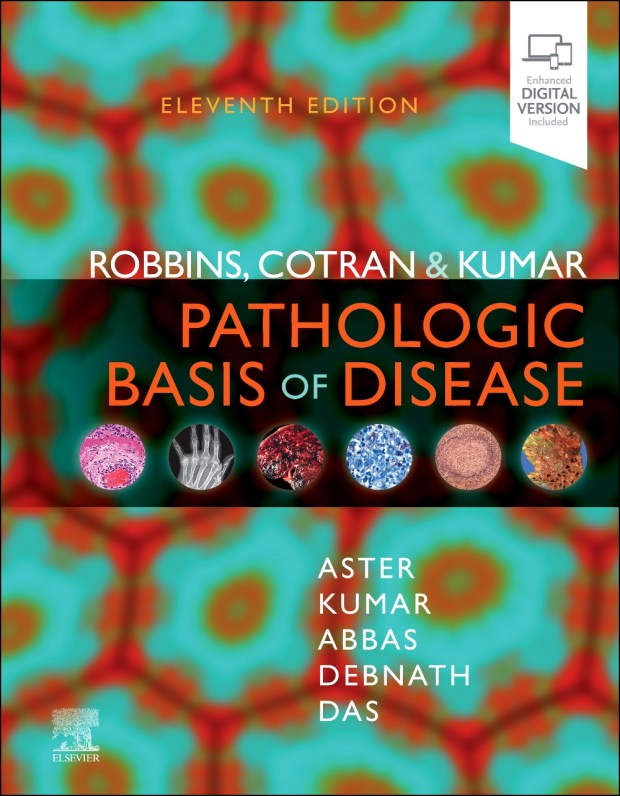
‘A New Way of Seeing: Robbins for Everyone — The Eleventh Edition of Structural and Functional Pathology’, Dr. Andrea Deyrup
Tuesday, August 25.
Language: English
Country – Local Time
Mexico: 10:30 AM
London, United Kingdom: 5:30 PM
New York, United States: 12:30 PM
If there’s one book that teaches you ‘why’ tissues and organs get diseased (and not just how to memorize it), it’s Robbins. This session—the only one 100% in Spanish—is special: Dr. Andrea Deyrup, part of the team of authors of the latest edition, tells you about the new perspective behind this edition: clearer, more accessible pathology designed to reach all students, not just those who already master the technical jargon.
Why it’s key to your training (11th edition):
– A reference in anatomical pathology for over 50 years.
– Full-color design with over 1,000 photographs and illustrations, bold summaries, and key concept boxes for quick study.
– Super-updated content: COVID-19, the role of the microbiome, personalized medicine, and targeted therapies.
– Greater focus on diversity and inclusion in the approach to diseases.
– Includes an e-book in English with a self-assessment question bank.
About the author: Dr. Andrea T. Deyrup is Professor of Pathology at Duke University School of Medicine, where she directs undergraduate pathology training. She trained at Princeton University and earned her PhD and M.Sc. from the University of Chicago, completing her residency in Anatomic Pathology and a fellowship in soft tissue pathology at Emory University. She is co-editor of Robbins & Kumar Basic Pathology, 11th Edition, and Robbins Essential Pathology, and has authored numerous scientific publications in journals such as the New England Journal of Medicine. She is nationally recognized for her pioneering work against race-based medicine, including critical content review in Robbins. In 2022, she was the first Duke lecturer to deliver the Stanley L. Robbins Memorial Lecture at Harvard Medical School, and in 2024, she was named to The Pathologist Magazine’s Power List in the Champions for Change category.
Session #4: The Developing Human
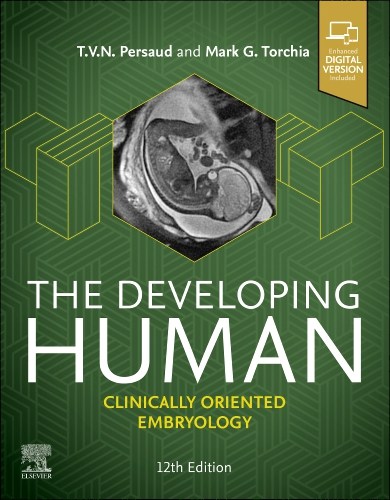
‘Evolution of The Developing Human over more than 50 years and some highlights of insightful enhancements’, Dr. TVN Persaud
Wednesday, August 26
Language: English.
🔗 Register here
Country – Local Time
Mexico: 10:30 AM
London, United Kingdom: 5:30 PM
New York, United States: 12:30 PM
Let’s be honest: embryology is one of those subjects that’s hard to grasp until you pick up ‘Clinical Embryology,’ the world’s leading reference for understanding how a human being develops from fertilization to birth (and how congenital malformations originate). With over 50 years of history, this book has been a valuable resource for generations of doctors. Its co-author, TVN Persaud, explains how the content has evolved and what recent improvements make this complex process a little easier to understand.
Why it’s key to your training (12th edition):
– It guides you month by month and stage by stage through the development of the embryo’s and fetus’s organs and systems.
– It combines photographs of real clinical cases, diagnostic imaging, and high-quality illustrations.
– It explains how molecular biology (recombinant DNA, stem cells) impacts current clinical practice.
– It includes a “Clinically Oriented Problems” section at the end of each chapter, with reasoned answers to test what you’ve learned.
– Ebook with a bank of self-assessment questions and 18 narrated animations.
About the author: Dr. TVN (Vid) Persaud is Professor Emeritus in the Department of Human Anatomical and Cellular Sciences at the University of Manitoba. He received the 2010 Henry Gray/Elsevier Distinguished Educator Award, the highest honor bestowed by the American Association of Anatomists for education in human anatomy. He was Professor and Head of the Department of Anatomy at the University of Manitoba and has also received the JCB Grant Award from the Canadian Association of Anatomists and the Honored Member Award from the American Association of Clinical Anatomists. He is currently a Visiting Professor at St. George’s University School of Medicine in Grenada, where he teaches anatomy and embryology.
5 reasons not to miss it
We’ve given you plenty of reasons not to miss these appointments, but if you’re still hesitating, here are 5 irrefutable ones:
- You’ll hear from the original source, not a summary of a summary. You’ll better understand the “why” behind what you study.
- You’ll learn how the people who write your books think. Spoiler alert! That will also help you study better and reason like them.
- Language is no excuse. You’ll have AI-powered Spanish subtitles so you can follow everything without missing a single detail.
- You’ll be able to get your own questions answered live. There will be a Q&A session, so you can ask that question you’ve been carrying around for semesters directly to the book’s author.
- Do you have a very important appointment on that day and at that time? No problem, the recording will be available. Register and we’ll send it to your email address minutes after the session ends.
Leave a Reply